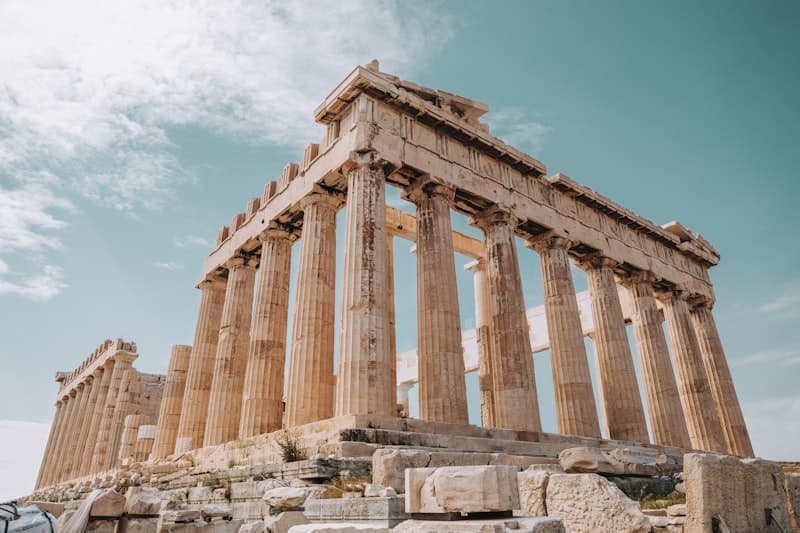
Socrates (469–399 BCE)
The founder of Western philosophy never wrote a word — his method of rigorous questioning (the Socratic method) defined philosophical inquiry. Executed for corrupting Athenian youth, his martyrdom made philosophy immortal.
The most influential thinkers in human history — their central questions, landmark works, and the ideas that permanently changed how humanity understands itself and the world.

The founder of Western philosophy never wrote a word — his method of rigorous questioning (the Socratic method) defined philosophical inquiry. Executed for corrupting Athenian youth, his martyrdom made philosophy immortal.
Cogito, ergo sum — 'I think, therefore I am' — is the most famous sentence in philosophy. Descartes' method of radical doubt founded modern epistemology and the mind-body problem that philosophy still grapples with.

Hume's radical scepticism about causation, the self, and miracles challenged the intellectual foundations of religion and metaphysics — his influence on Kant, Adam Smith, and the Scottish Enlightenment was transformative.

A Theory of Justice — and its 'veil of ignorance' thought experiment — established the most influential framework in 20th-century political philosophy, defining justice as fairness in liberal democratic societies.

Socrates' student articulated the Theory of Forms, the allegory of the cave, and the ideal state in The Republic — founding metaphysics and political philosophy and transmitting Socratic thought to all future generations.

God is dead, the will to power, the eternal recurrence, and the Übermensch — Nietzsche's provocations dismantled Victorian morality and shaped existentialism, postmodernism, and 20th-century culture.

The most important philosopher of the 20th century wrote two revolutionary works that contradicted each other — the Tractatus and Philosophical Investigations redefined language, logic, and the limits of what can meaningfully be said.

Plato's student created systematic frameworks for logic, biology, physics, ethics, politics, and aesthetics. Aristotle's writings formed the intellectual backbone of Western civilisation for nearly two thousand years.
The Second Sex — 'One is not born a woman, one becomes one' — founded second-wave feminism and existentialist ethics simultaneously. De Beauvoir's radical challenge to gender essentialism changed philosophy and society.

Marx's materialist analysis of history and the class struggle produced the most consequential political philosophy of the 20th century — shaping revolutions across Russia, China, Cuba, and across the developing world.

Kant's Critique of Pure Reason permanently transformed epistemology by arguing that the mind actively structures experience. His categorical imperative remains the most influential framework in modern moral philosophy.

The utilitarian principle — the greatest happiness for the greatest number — and his On Liberty defence of individual freedom against social tyranny remain the foundational texts of liberal political philosophy.
“Socrates (469–399 BCE)”
Currently ranked #1. Where will it be in 7 days?
The most famous and mind-bending philosophical scenarios — from the trolley problem to the Chinese Room — that reveal deep truths about ethics, consciousness, and reality.
Accessible, engaging, and transformative philosophy books — ideal starting points for anyone new to philosophical thinking.