History & Culture

Greatest World Leaders Who Changed Diplomacy Forever

Diplomacy is the art of resolving conflict without war — and a handful of world leaders have wielded it so masterfully that they reshaped the international order. These statesmen and stateswomen transformed enemies into allies, ended wars thought unwinnable, and built institutions that outlasted their own lifetimes. Ranked by their lasting impact on world diplomacy.

Pick your favorites · Every vote moves the ranking · Results update live
← Lists
12 items
Your votes move these rankings⚡ Battle mode
Sort
01
Anwar Sadat — Egypt

Anwar Sadat — Egypt

Sadat's historic visit to Jerusalem in 1977 — the first by an Arab leader — broke a 30-year taboo and led directly to the Camp David Accords and Egypt-Israel peace treaty in 1979. He proved that the most entrenched conflicts can be ended through courage and unilateral diplomatic initiative. He was assassinated for this act of peace in 1981.

Steady·Score +20
02
Winston Churchill — United Kingdom

Winston Churchill — United Kingdom

Churchill's wartime diplomacy forged the Allied coalition that defeated Nazi Germany — maintaining the Grand Alliance between the ideologically opposed US, UK, and USSR through force of personality, strategic vision, and the Atlantic Charter. His 'Iron Curtain' speech also defined the Cold War's terms before it had even fully begun.

Steady·Score +18
03
J

Jawaharlal Nehru — India

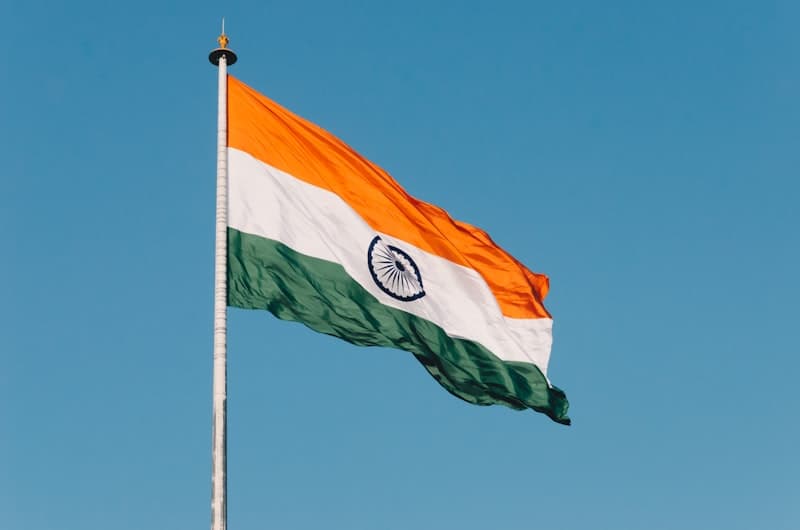
India's first Prime Minister co-founded the Non-Aligned Movement, allowing developing nations to chart independent foreign policy paths outside the Cold War blocs. Nehru's vision of a 'Third Way' gave voice to the newly decolonized world and established India as a moral authority in international affairs for decades.

Steady·Score +16
04
F

Franklin D. Roosevelt — United States

FDR's wartime diplomacy created the Grand Alliance against the Axis powers and laid the groundwork for the postwar international order — the United Nations, the Bretton Woods system, and the concept of Four Policemen maintaining global peace. His vision of collective security still underpins international relations today.

Steady·Score +13
05
Henry Kissinger — United States

Henry Kissinger — United States

As Nixon's National Security Advisor and Secretary of State, Kissinger engineered the US opening to China, détente with the Soviet Union, and the Paris Peace Accords ending US involvement in Vietnam. His realpolitik approach — prioritizing strategic interests over ideology — transformed modern diplomacy, for better and worse.

Steady·Score +9
06
Kofi Annan — United Nations

Kofi Annan — United Nations

The first UN Secretary-General from sub-Saharan Africa, Annan reformed the UN, championed the Responsibility to Protect doctrine (R2P), established the Global Fund to fight AIDS, and won the Nobel Peace Prize in 2001. His tenure redefined what the UN could be as a moral force in international affairs.

Steady·Score +7
07
Angela Merkel — Germany

Angela Merkel — Germany

The most powerful woman in European politics for 16 years, Merkel kept the European Union together through the 2008 financial crisis, the Greek debt crisis, Brexit, and the refugee crisis of 2015. Her patient, data-driven consensus-building style redefined what modern multilateral diplomacy looks like in a fragmented world.

Steady·Score +5
08
Nelson Mandela — South Africa

Nelson Mandela — South Africa

After 27 years in prison, Mandela chose reconciliation over revenge, negotiating South Africa's peaceful transition from apartheid to democracy. His establishment of the Truth and Reconciliation Commission — inviting confession and forgiveness rather than punishment — became the global model for post-conflict healing and diplomatic transition.

Steady·Score +4
09
Deng Xiaoping — China

Deng Xiaoping — China

Deng's 'Reform and Opening Up' policy from 1978 transformed China from an isolated, impoverished communist state into the world's second-largest economy. His diplomatic normalization with the West, the 'one country, two systems' arrangement for Hong Kong, and strategic partnership agreements reshaped Asia's geopolitics permanently.

Steady·Score +4
10
Mikhail Gorbachev — Soviet Union

Mikhail Gorbachev — Soviet Union

Gorbachev's policies of glasnost (openness) and perestroika (restructuring) triggered the peaceful dissolution of the Soviet empire. By refusing to use military force to prevent Eastern European democratization, he allowed the Cold War to end without a catastrophic final confrontation — an act of statesmanship without parallel in 20th-century history.

Steady·Score +3
11
Woodrow Wilson — United States

Woodrow Wilson — United States

Wilson's Fourteen Points and vision of a League of Nations established the modern framework of liberal internationalism — self-determination, collective security, open diplomacy, and international law. Though the US Senate rejected the League, Wilson's ideas became the foundation of the United Nations and the entire post-WWII international order.

Steady·Score +2
12
Otto von Bismarck — Prussia/Germany

Otto von Bismarck — Prussia/Germany

The 'Iron Chancellor' unified Germany through three calculated wars but then maintained European peace for 20 years through a masterwork of alliance diplomacy — the Concert of Europe. Bismarck's realpolitik, balance-of-power diplomacy became the foundation of modern international relations theory.

Steady·Score -3
Predict the rank

Anwar Sadat — Egypt

Currently ranked #1. Where will it be in 7 days?

More in History & Culture

M
History & Culture
Most Impactful Cold War Events That Shaped the Modern World

For 44 years, the Cold War between the United States and Soviet Union defined global politics, technology, culture, and diplomacy. These are the defining moments of that era — from the Berlin Airlift to the Moon Landing to the fall of the Wall — events that still echo through the world we live in today.

12 items70 votesUpdated 2 hours ago
G
History & Culture
Greatest Geopolitical Turning Points of the 20th Century

The 20th century reshaped the world's borders, power structures, and ideologies more dramatically than any period in history. From world wars to decolonization to the fall of empires, these are the moments that defined the modern world order — ranked by their lasting geopolitical impact.

12 items113 votesUpdated 2 hours ago
History & Culture
Most Famous Battles That Changed History

A single battle can redirect the course of civilisation — determining which language a continent speaks, which religion it follows, or whether a nation exists at all. These are the battles whose outcomes shaped the world we live in today.

12 items86 votesUpdated 1 day ago