- How do I start investing for beginners?
- Beginner investing roadmap: (1) Emergency fund first — before investing, build 3–6 months of expenses in a high-yield savings account (Marcus, Ally, SoFi, Discover — currently 4.5–5.25% APY as of 2024). Investing without an emergency fund risks selling investments at a loss when unexpected expenses arise. (2) Pay off high-interest debt — credit card debt at 18–24% APR is a guaranteed 18–24% return on your money — pay it before investing. (3) Maximize employer 401(k) match — free money: if your employer matches 50% of contributions up to 6% of salary, contribute at least 6% before any other investing. (4) Open Roth IRA (income below $146,000 single/$230,000 joint, 2024 limits, $7,000 annual contribution limit) — tax-free growth and tax-free withdrawals in retirement. Fidelity and Vanguard are the best providers (zero minimum, no fees). (5) Invest in low-cost index funds — Vanguard Total Stock Market Index Fund (VTSAX, expense ratio 0.04%), iShares MSCI World (URTH, global exposure), and Vanguard Total Bond Market (VBTLX) for conservative allocation. (6) Set automatic monthly contributions and ignore market volatility — time in the market beats timing the market (Jack Bogle's core insight).
- What is compound interest and why does it matter?
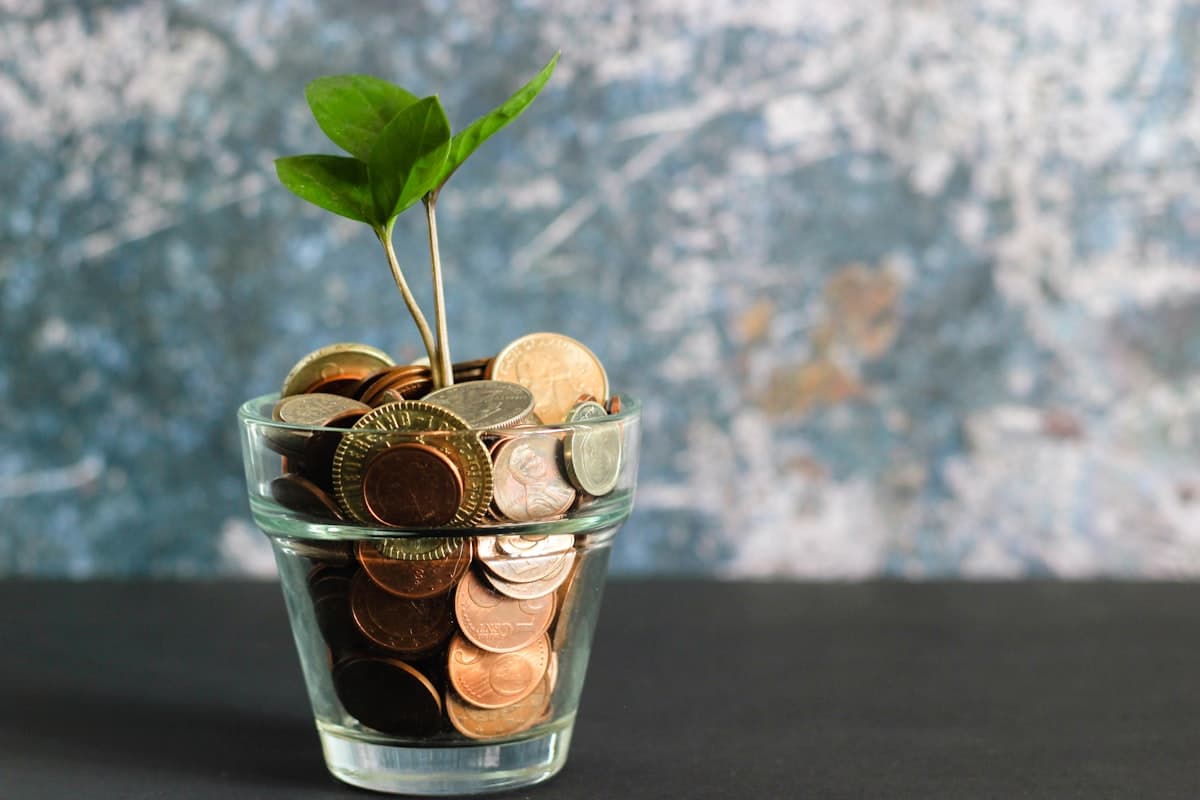
- Compound interest is the process by which interest earned on an investment is reinvested to generate additional earnings — creating exponential growth over time. Albert Einstein reportedly called it 'the eighth wonder of the world.' The Rule of 72: divide 72 by annual return percentage to estimate years to double your money (72 ÷ 7% = ~10 years to double). Example of compounding: $10,000 invested at 7% annual return: After 10 years: $19,672. After 20 years: $38,697. After 30 years: $76,123. After 40 years: $149,745. The same $10,000 at simple interest (7% on original principal only) would yield $38,000 after 40 years vs. compound's $149,745 — a $111,745 difference from the same $10,000 initial investment. Key insight: time is the most important variable in compound growth. Starting at 25 vs. 35 makes a dramatically larger difference than increasing contribution amount. A 25-year-old investing $200/month at 7% until 65 accumulates $527,000. A 35-year-old starting the same $200/month reaches only $243,000 at 65. The cost of a 10-year delay is $284,000.
- What is a stock and how does the stock market work?
- A stock (equity share) represents fractional ownership of a publicly traded company. When you buy one share of Apple (AAPL), you own a proportional piece of Apple Inc. — entitled to a share of profits (via dividends) and voting rights on major company decisions. Stock markets (NYSE, NASDAQ, London Stock Exchange, Tokyo Stock Exchange) are organized exchanges where buyers and sellers trade stock through brokers. Price is set by supply and demand — when more people want to buy a stock than sell it, price rises; vice versa. Returns come from: capital appreciation (stock price increasing) and dividends (periodic cash payments from company profits, typically 1–4% annually for dividend-paying stocks). Stock indices measure collective market performance: the S&P 500 tracks 500 large US companies (historical average annual return: ~10% before inflation), Dow Jones Industrial Average (30 blue-chip companies), NASDAQ Composite (tech-heavy). How to buy stocks: open a brokerage account (Fidelity, Schwab, Vanguard, or Robinhood for beginners — all offer zero-commission stock trades), deposit funds, and place market or limit orders. For beginners: index funds (owning tiny pieces of 500–3,000 companies) dramatically reduce individual stock risk.
- What is the difference between stocks and bonds?
- Stocks and bonds are the two foundational asset classes in investing, with fundamentally different risk-return profiles: Stocks (equities): ownership stakes in companies. Potential return: unlimited upside (company can grow tenfold), but total loss is possible (company can go bankrupt). Historical average annual return: S&P 500 average 10.3% (1926–2023, Morningstar). Volatility: high — stocks can lose 30–50% in bear markets (2008: -37%, 2022: -19.4%). No guaranteed payments. Bonds (fixed income): loans to governments or corporations. The borrower pays a fixed interest rate (coupon) for a defined period, then returns the principal. Return: lower and more predictable — US government 10-year Treasury currently ~4.5% (2024); corporate bonds 5–7%. Risk: lower — unless the issuer defaults (rare for investment-grade issuers). Serves as portfolio stabilizer. Inverse relationship with stocks: bonds often rise when stocks fall (flight to safety). Asset allocation rule of thumb: younger investors (25–40) hold more stocks (80–100%); older investors near retirement hold more bonds (40–60%) to reduce volatility when they need to draw down savings.
- What is an index fund and why do experts recommend it?
- An index fund is a type of mutual fund or ETF that tracks a specific market index (like the S&P 500, representing the 500 largest US companies) by holding all or most of the securities in that index in the same proportions. Instead of trying to 'beat' the market through active stock selection (active management), an index fund simply owns the market. Why experts recommend index funds: (1) Costs: actively managed funds charge 0.5–1.5% annual expense ratios; Vanguard Total Stock Market Index (VTSAX) charges 0.04%. Over 30 years on $100,000, this 1% difference = $174,000 in lost returns to fees. (2) Performance: SPIVA data (S&P vs. Active) shows that 88–92% of actively managed US large-cap funds underperform their benchmark index over 15 years. Index funds beat most professional fund managers. (3) Diversification: an S&P 500 index fund owns 500 companies — eliminating single-stock risk. (4) Simplicity: no research or active monitoring required. Warren Buffett has recommended low-cost S&P 500 index funds for average investors in multiple Berkshire Hathaway letters. John Bogle, Vanguard founder, pioneered index investing and created the first retail index fund in 1976.