Ancient Civilizations

Greatest Ancient Civilizations and Their Lasting Legacies

The most influential civilisations in human history — their achievements, innovations, and the ideas they gave to the modern world.

Pick your favorites · Every vote moves the ranking · Results update live
← Lists
12 items
Your votes move these rankings⚡ Battle mode
Sort
01
The Islamic Golden Age — Abbasid Caliphate (750–1258 CE)

The Islamic Golden Age — Abbasid Caliphate (750–1258 CE)

Baghdad's House of Wisdom preserved and advanced Greek knowledge during Europe's Dark Ages — Arabic scholars pioneered algebra, optics, medicine, astronomy, and philosophy that later fuelled the European Renaissance.

Steady·Score +14
02
The Indus Valley Civilization (3300–1300 BCE)

The Indus Valley Civilization (3300–1300 BCE)

The largest of the ancient civilisations by area — spanning modern Pakistan and northwest India — Mohenjo-daro and Harappa featured advanced urban planning, sewage systems, and standardised weights centuries before Rome.

Steady·Score +11
03
The Persian Empire — Achaemenid Dynasty (550–330 BCE)

The Persian Empire — Achaemenid Dynasty (550–330 BCE)

At its height governing 40% of the world's population, Persia pioneered human rights (Cyrus Cylinder), religious tolerance, postal communication, and the concept of imperial administration across vast multi-ethnic territory.

Steady·Score +11
04
The Roman Empire (27 BCE–476 CE)

The Roman Empire (27 BCE–476 CE)

At its peak governing 70 million people across three continents, Rome gave the world its legal system, Romance languages, Christianity's global spread, urban infrastructure, and the concept of constitutional governance.

Steady·Score +11
05
The Mongol Empire (1206–1368 CE)

The Mongol Empire (1206–1368 CE)

The largest contiguous land empire in history — at its peak spanning 24 million square kilometres — Genghis Khan's empire connected East and West through the Silk Road, enabling unprecedented cultural and technological exchange.

Steady·Score +9
06
Ancient China — Shang and Zhou Dynasties (1600–256 BCE)

Ancient China — Shang and Zhou Dynasties (1600–256 BCE)

Ancient China's contributions to humanity include paper, printing, gunpowder, the compass, silk, iron casting, and philosophical traditions — Confucianism, Taoism, and Legalism — that shaped half the world's culture.

Steady·Score +7
07
Ancient Egypt (3100–332 BCE)

Ancient Egypt (3100–332 BCE)

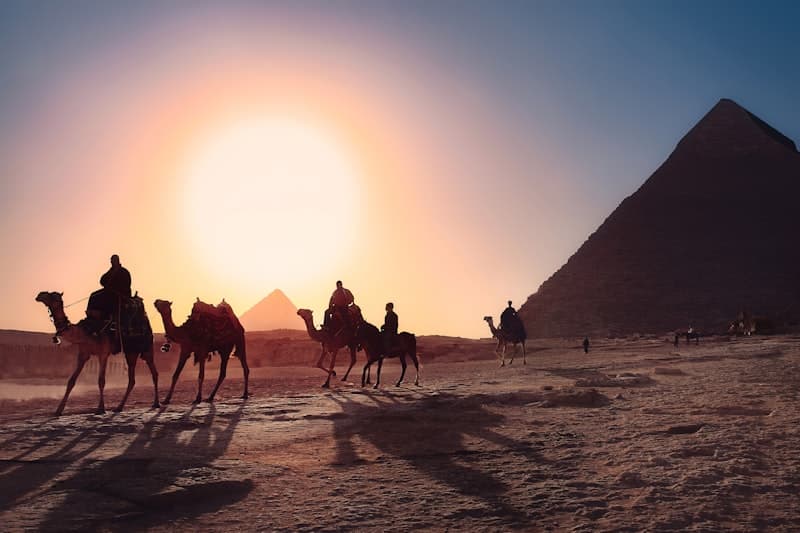
The Nile civilisation that built the pyramids, developed hieroglyphic writing, invented papyrus, and pioneered medicine, architecture, and calendar systems that influenced all subsequent Mediterranean civilisations.

Steady·Score +7
08
The Inca Empire (1438–1533 CE)

The Inca Empire (1438–1533 CE)

The largest empire in pre-Columbian America — stretching 4,300km along the Andes — built Machu Picchu, the most extensive road network in the Western Hemisphere, and mastered terrace agriculture at altitude.

Steady·Score +7
09
The Aztec Empire (1300–1521 CE)

The Aztec Empire (1300–1521 CE)

Tenochtitlán, the Aztec capital built on a lake island, was larger than any European city of its era. The Aztec calendar, agricultural innovations, and cosmic religion represent one of the New World's greatest civilisations.

Steady·Score +5
10
The Maya Civilization (2000 BCE–1500 CE)

The Maya Civilization (2000 BCE–1500 CE)

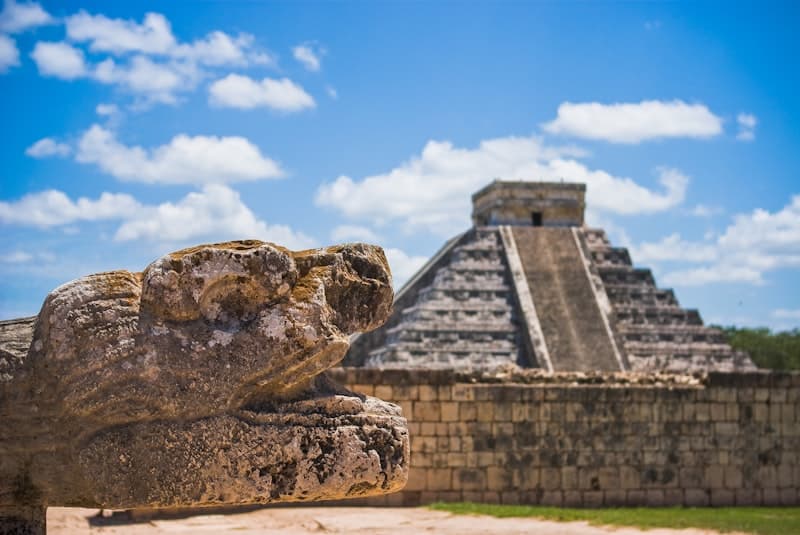
The Maya developed the only fully functional writing system in pre-Columbian America, independently calculated the length of the solar year to extraordinary precision, and built astronomical observatories of lasting genius.

Steady·Score +4
11
Ancient Greece (800–146 BCE)

Ancient Greece (800–146 BCE)

Democracy, philosophy, mathematics, theatre, the Olympic Games, and scientific empiricism — ancient Greece's intellectual legacy is the direct foundation of Western civilisation, science, and political thought.

Steady·Score +3
12
Mesopotamia — Sumerians and Babylonians (4500–539 BCE)

Mesopotamia — Sumerians and Babylonians (4500–539 BCE)

The 'cradle of civilisation' between the Tigris and Euphrates produced writing (cuneiform), the wheel, the first legal code (Hammurabi), astronomy, mathematics, and the world's first cities including Ur and Babylon.

Steady·Score +2
Predict the rank

The Islamic Golden Age — Abbasid Caliphate (750–1258 CE)

Currently ranked #1. Where will it be in 7 days?

More in Ancient Civilizations